From the former CBOE market maker Jim Cramer calls his "volatility guru":
These 8 AI Prompts Discovered the Names That Ran 427%, 250% and 206% in 9 Weeks
No experience required. Copy, paste, find explosive trades in minutes. On December 1, Nvidia shows the world its plans with Jensen Huang back in charge, and the next list is in that transcript.
As seen on CNBC Bloomberg Fox Business

Where were you on November 12, 2026?
That was the Thursday Jensen Huang walked out of Nvidia, and the board put it in writing the same day: it did not intend to bring him back.
11 days later, on November 23, that same board voted unanimously to put him back in the chair, and the stock jumped 35% before lunch.
The last founder who walked back into the company he built was Steve Jobs, in 1997.
Every roadmap Nvidia ever showed the world came out of Jensen Huang's mouth. So did every receipt on this page: the March keynote that handed me 13 names, the interview where he said "plumbers and electricians," the hour with Ezra Klein in September.
The man every AI stock you own was priced against is back, and on December 1 he has a stage.
On Tuesday, December 1, Nvidia lays out its roadmap in Washington, inside the Reagan Building, 3 blocks from the White House, with its founder back in charge.
Think about what that day is for him.
Wall Street spent 11 days asking whether Nvidia was bigger than one man. Washington is still asking, and on November 23 the board said its own investigation will proceed to conclusion. Every supplier, every partner and every customer is waiting to hear its own name come out of that building.
A founder who just got his company back doesn't walk into that week and hold back. He shows the whole roadmap and he names every partner he's betting on.
And every one of those names is a public company with a ticker.
I know, because I've already seen what falls out when Jensen talks.
The last time he laid out his roadmap, March 16, he did it alone, for 2 hours, on a stream that cost nothing to watch. I ran that transcript through one prompt. It handed back 13 public companies, ranked, before the market opened the next morning.
Nine weeks later, $1,000 in calls on the top three was worth $5,270, $3,500 and $3,060.
The table has all 13, where the prompt found each one, and what $1,000 in calls bought the next morning was worth 9 weeks later:
| Name the prompt discovered | Where the prompt found it | $1,000 became | The calls | The stock |
|---|---|---|---|---|
| Micron (MU) | He named it | $5,270 | +427% | +77% |
| Corning (GLW) | Supplier, one step up | $3,500 | +250% | +51% |
| Broadcom (AVGO) | He named it | $3,060 | +206% | +30% |
| Quanta (PWR) | Two layers back | $2,770 | +177% | +29% |
| Synopsys (SNPS) | He named it | $2,580 | +158% | +25% |
| Comfort Systems (FIX) | Two layers back | $2,550 | +155% | +34% |
| TSMC (TSM) | He named it | $2,500 | +150% | +23% |
| ...and 6 more behind them |
Over the same 9 weeks the S&P 500 gained about 10%. The names on that list averaged 157% on the calls, 16 times the market.
That list came out of the first of the 8 prompts in this manual.
It's called the Conference Decoder, and the stock column is there so you can pull Micron's March 20 and May 22, 2026 closes on any free chart and check it yourself.
Further down this page is the same prompt's output on a talk from September 23, 2026, with the date on it and the names still sitting where it found them, so you can judge it before the outcome instead of after.
Every one of those names was sitting in a free stream anyone could watch.
Micron, the biggest of them, was a name every trader on earth already knew. The calls still did 427% in nine weeks, because the prompt put it on a list the morning after instead of the month after.
Now picture the other trader. He watched the same keynote. He read the recap on his phone the next morning, nodded at the names he already owned, and went to work.
Weeks later, when the contractors were on every screen and already up big, he bought them there, at the top of a move the prompt had flagged on day one.
He made a little, and he paid full price for a name he could have had at the start.
You know this trader, because you've been him. You've watched a name run without you and told yourself you'd catch the next one, and the next one came with a recap, same as the last.
Sit with that. Everybody had the name. The money was in having the list the next morning.
Everyone who reads the headlines the week of December 1 gets the story. The person who reads the transcript gets the names. I built a prompt that reads the transcript.
If you've tried AI for trading, you already know it doesn't hand you a list like that on its own. It let you down one of three ways. You asked it what to buy and got the ten biggest stocks and a warning to consult a professional.
You asked it about a company and got a book report you could have read on Yahoo Finance. You told it about a trade you liked, and it agreed with you, right before the trade went against you.
If you've never tried it, you've heard it takes a technical mind. It takes copy and paste, and the only thing that decides what comes back is what you paste in.
This isn't a list of prompts. Those are everywhere, and they're the ones that gave you the book report.
The difference between that list and your book report was never the app.
Claude and ChatGPT both have free versions with web search built in, the $20 plan takes the limits off, and the hedge funds run the very same models.
The difference is what he typed into it, and that is a difference you can copy.
The AI's favorite answer is the ten biggest stocks and a reminder to consult a professional. I am the professional. It still tells me.
None of what you got before was your fault. The AI was being polite, and polite is worthless when your money is on the line.
A prompt built to do one specific job gives it no room to be polite. That's what these 8 are.
The First Prompt Is the One That Found Those 13 Names
The Decoder works like this.
You paste in the transcript of any talk, or an article, a research report or a press release.
It pulls out every company that stands to make money from what was said and sorts them into 3 groups: the obvious names everybody already knows, the suppliers one step up the chain, and the names 2 layers back that nobody has connected yet.
That third group is where Quanta and Comfort Systems came from, and it's where the 177% and 155% came from. The full transcript is where those names hide, because the recap article is what everybody else read.
Then it checks whether each company can hold its price when the crowd shows up. It runs four tests.
A fat backlog of orders doesn't pass them, and a famous name doesn't pass them. The prompt has to show you the evidence.
Run those tests on the September list and the contractors everyone chased fail all four. The two software names the market is running from pass. That's how the prompt tells you which cheap stock is cheap for a reason.
Then it does the thing that separates a trade from a chase.
It checks one number for every name on the list, a number Wall Street watches and most retail traders never look at, and re-sorts the list. The names the crowd hasn't found yet go to the top.
The names you'd be buying late go to the bottom. Each one gets a tag so you can't mix them up.
Coherent was sitting on a fresh high in late April after a run from under $100. The prompt would have tagged it as already found. It fell 7.4% on May 6.
That check runs inside six of the eight prompts.
And This Is What It Handed Back on September 23
On September 23, 2026, Jensen Huang sat down with Ezra Klein for an hour and 47 minutes. The interview was about jobs, safety and regulation. None of it was aimed at anybody's portfolio.
The Interview Decoder's output on that transcript, cut to the four rows with the strongest evidence, with prices as of September 28:
| Ticker | How the prompt found it | What he said, and when | Why it can hold its price | Below its high | The prompt's tag |
|---|---|---|---|---|---|
| ADBE | He named it | 1:01:16, "There'll be more people using Adobe" | Customers can't leave without a rebuild; subscription revenue | 39% | ASYMMETRIC |
| CRM | He named it | 1:01:16, "more using Salesforce tools" | Customers can't leave without a rebuild; subscription revenue | 38% | ASYMMETRIC |
| GEV | He let it slip | 1:43:27, "in four or five years time we're going to use a lot more fossil fuel" | One of three companies on earth that build these turbines | 25% | ROOM TO RUN |
| PWR | He let it slip | 1:28:28, "we're creating a shortage of labor" | Multi-year utility contracts, but mostly project work | 18% | ROOM TO RUN |
ASYMMETRIC means the crowd hasn't found it yet. ROOM TO RUN means it's moving but not done.
Two companies the man running the most valuable company on earth named out loud, Adobe and Salesforce, landed at the top of the list, sitting 39% and 38% below their highs.
The market has been selling both on the exact fear he spent a minute dismissing: that AI agents replace the tools. He said the opposite.
Agents will multiply the number of people using them.
The contractors showed up again, for the third time in six months, in something he let slip about a labor shortage. The check says they've already run most of the way.
Nobody knows yet whether he's right about the software names, and anybody can watch it play out from here. That's a list with a date on it, before the outcome, and it's the only kind worth paying for.
Keynote Week Starts November 30, and This One Has Something to Prove
GTC was Jensen's stage for 17 years. Every roadmap Nvidia ever showed the world came out of his mouth, and the names that ran came out with it.
On Monday, November 30, it opens in Washington 1 week after the board brought him back. The roadmap comes out Tuesday afternoon. Nvidia hasn't said whether he takes the stage himself or whether it will stream the talks, and I won't promise you either. The press is in the room, Nvidia posts the sessions on demand, and the Decoder reads a transcript, not a man.
If you want the list the morning after, before the recap, keep reading.
The same Monday, AWS opens re:Invent in Las Vegas. Matt Garman keynotes Tuesday morning, and that one streams free on YouTube the way it does every year.
That's 2 of the biggest AI events of the year inside the same 4 days, and one of them belongs to a company that just got its founder back.
The last time Nvidia told the world its plans, the list the Decoder pulled out paid 427%, 250% and 206% on the calls, off a stream that cost nothing to watch.
The obvious names will get bid the same day, because that's what always happens. The names 2 layers back will sit there for days while everybody else reads the recap, the way Quanta and Comfort Systems sat there in March.
You don't have to wait for December 1 to run your first one. Satya Nadella gave his Ignite keynote in San Francisco on November 17. The replay is on YouTube tonight and the transcript is a paste away. Run the Decoder on it this evening and you'll know exactly how it works before the busiest week of the year.
The manual downloads in about a minute, and your first prompt runs in the next ten.
Launch price: Platinum is $149 for the year through January 4, not $199. 365-day full refund on Silver and Platinum.
A Month Later, He Said Out Loud Why the Contractors Were Running
On April 15, 2026, Jensen Huang sat down with podcaster Dwarkesh Patel for an hour and 43 minutes about chip supply chains. It was a two-hour argument about fabs, memory and export controls. None of it was aimed at anyone's portfolio.
Thirteen minutes in, Patel asked which bottleneck was the hardest to fix. Jensen's answer was three words: "Plumbers and electricians." Then he went back to talking about lithography.
Run that transcript through the second prompt, the Interview Decoder, and it flags that one moment. It discovers the specialty contractors that are the plumbers and electricians of the AI buildout: Quanta, Comfort Systems and EMCOR.
Those are the same three names the Conference Decoder had already pulled out of the March keynote a month earlier, where the calls did 177%, 155% and 80%.
The interview told you, in his own words, why the trade you could have taken in March was working. That's why you run the Decoder the week of the event and not the month after.
The Same Workflow Read Nike, Fastly and the Software Selloff
The prompts aren't only for keynotes.
On March 31, 2026, Nike beat on revenue and on earnings. You saw the headline. You'd been waiting for a reason to buy the dip, and there it was.
The Earnings Interpreter read the same release at 4:30 p.m. and called it BEARISH with HIGH confidence. Direct sales were down 7%, profit margins were shrinking, and the forecast language had gone soft.
The stock opened down more than 10% the next morning and kept falling for a week, to its lowest level since 2014. The dip buyers who stepped in on the headline got run over.
Four minutes with the prompt would have kept you on the sidelines.
Then there's the opposite problem. Fastly reported a blowout on February 11, 2026, and closed up 72% the next day. Was that the whole move, or the start of one?
Most traders guessed. Guidance vs. Reality read the company's forecast for the year and called it lowballed on purpose, the kind of forecast a company sets so it can beat it later.
The tells were a tight range, cautious assumptions, and a history of beating its own numbers.
From the February 13 close the stock ran about 83% more, to $34.82 in the second week of April, and management raised its forecast in May and again in August.
And when a whole sector gets dumped, the seventh prompt reads that. At the June 2026 low, with software sold on the fear that AI agents replace the tools, the Moat Audit ran four tests on the biggest names in the group. It cleared Salesforce, ServiceNow, Adobe and Workday as sold for the wrong reason, and it left Intuit and Oracle on the fence for reasons it named.
Ninety days later the four it cleared averaged 36%. The software ETF did 16% over the same stretch. ServiceNow closed at $99.28 on June 30 and $131.45 on September 28, and both prices are on any free chart.
Keynotes happen a few times a year. Earnings happen every quarter to every name you own, and selloffs come whenever they come. That is why the Decoder Desk's brief is weekly and not quarterly: the inputs don't wait for Nvidia.
Wall Street Is Paying $25,000 a Day to Learn This
Bloomberg reported in May that two former SoftBank fund managers are charging banks $25,000 a day to teach their analysts how to prompt. They're booked 2 months out.
T. Rowe Price, Citigroup and Bank of America are on the client list.
So the firms with the terminals and the quants are paying $25,000 a day to learn what to type into a $20 app. They're behind, and they know it.
The biggest names in the business know it, too.
Stanley Druckenmiller ran George Soros's money when they broke the Bank of England. He told CNBC he built his Argentina position by asking Perplexity for the 5 most liquid Argentine stocks and buying all of them.
Filings later showed the stake near $280 million.
Ken Griffin runs Citadel. He called AI "garbage" at Davos in January. By May he was telling Stanford that work his masters and PhDs did over weeks or months now takes AI agents hours or days.
They will close this gap eventually, because they always do. They haven't closed it yet, and until they do, the tool on your phone is as good as the one on their desk.
Inside the 8 Prompts
- Why the third group, the names two layers back that nobody has connected yet, is where Quanta and Comfort Systems came from, and why the Decoder is built to refuse to drop it even when the list runs long.
- The three words a CEO says when he isn't watching his mouth, and why the Interview Decoder treats them as worth more than anything he says on purpose. (Jensen's were "plumbers and electricians," 13 minutes in.)
- You have to sit through the whole two-hour interview to catch what he conceded, right? Wrong. The two follow-up questions that make the AI list every place he departed from his usual line, with the timestamp for each.
- The three lines in Nike's March 31 release that turned a headline beat into a BEARISH read at 4:30 p.m., before the stock opened down more than 10% and kept falling to a 12-year low.
- Is it a real move or a headline trap? How the Earnings Interpreter sees through the words companies use to dress up a bad quarter and hands you a verdict, bullish or bearish, with a confidence grade, in minutes.
- How to tell when a company is lowballing its own forecast so it can beat it later, from the words management uses and not the numbers. That's the setup that paid 83% on Fastly.
- The names that move when the winners move even though the news never touches them, and why they're often the best trades in the whole grid.
- Why a fat backlog and a famous name are the two things retail traders mistake for a company that can hold its price, and the four tests that actually tell you.
- When a whole sector gets dumped, which names deserved it and which got sold only because they sit in the same fund. At the June 2026 low, this prompt cleared four software names the crowd had given up on. Ninety days later they averaged 36% while the software ETF did 16%.
- Why the obvious names run first, the suppliers run three to six months later, and the companies that build the power and the buildings run six to twelve months after that, and how knowing which stage you're in tells you what to buy now.
- The names almost no analyst on Wall Street covers, which is where nobody has bid yet.
- What never to buy off an AI list, and the tag the prompt puts on it so you can't miss it. Coherent wore that tag in late April and fell 7.4% on May 6.
- PLUS the six-word question Mark fires after every prompt, every time, that has killed more bad trades than any check: "Now tell me why I'm wrong."
You could buy a binder of 200 prompts and never open most of them. These are 8, each with one job, and you saw what the first one did.
You don't need AI experience, a finance degree or a terminal for any of it. You copy, you paste, you read what comes back, and you decide.
365-day full refund. Every download is yours to keep.
Two Questions You're Already Asking
If ten thousand people buy these prompts, doesn't the edge die? The edge was never over other buyers. It's over the trader reading the recap the morning after, and there are millions of him. The inputs change every week, the list changes with them, and a few thousand people running the Decoder on a list of dozens of names don't move Micron.
Can't I just ask ChatGPT to write me prompts like these? You can, and you'll get the polite version. What it won't write is the four tests a name has to pass, the six places the one-number check runs, the weighting that puts what a CEO let slip above what he said on purpose, or a year of runs with receipts. Those took a year. The prompts are the year.
The Workflow Is What Turns the List Into a Trade
The prompts get you the list. The workflow is how I read it, and it's the part nobody can copy off a blog.
The workflow is the 3 checks I run before I trust any list the AI hands me, the follow-up questions that turn a generic first answer into something worth trading, and the one-number check that separates a real setup from a name that's already run.
I use it every day. It's written out so you can run it the first night.
If you've never gotten a useful answer out of AI, the Quickstart that comes with this walks you through your first run one step at a time.
Who I Am
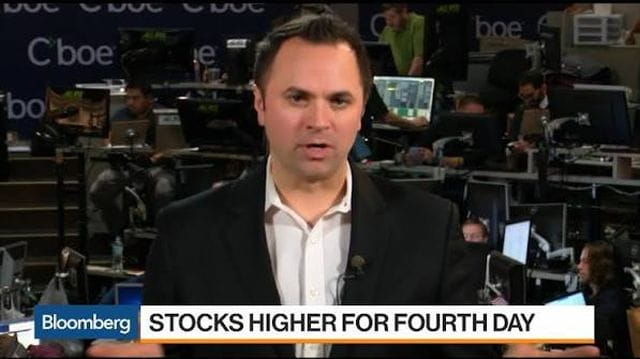
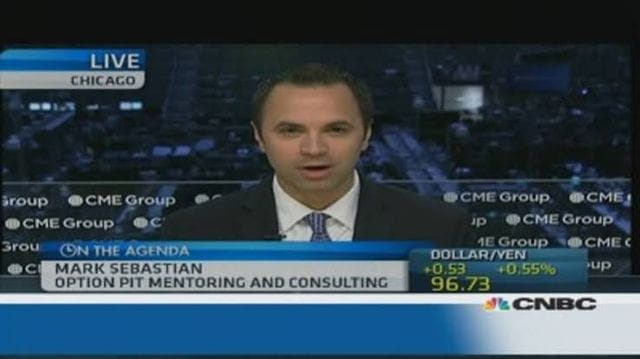
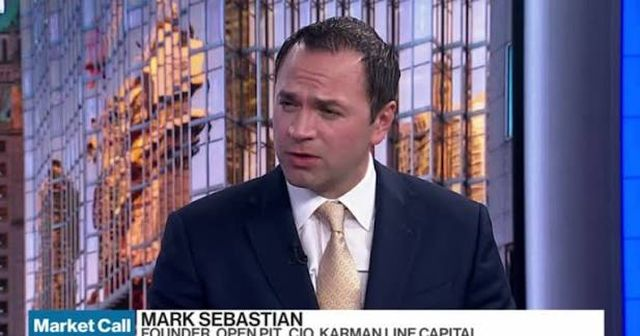
I'm Mark Sebastian. I spent nearly a decade as a market maker on the floors of the CBOE and the American Stock Exchange, wrote The Option Trader's Hedge Fund, and founded Option Pit.
Today I'm the CIO of Karman Line Capital. When markets break, CNBC, Bloomberg and Fox Business call me.
Jim Cramer calls me his volatility guru.
Back when I was making markets on the floor of the CBOE, the trade went to whoever had the best spot in the pit and the fastest hands. It had worked that way for generations.
Then electronic trading showed up, and inside a few years the floor was gone.
The traders who did well after that weren't the smartest guys in the pit. They were the ones who sat down and learned the new machine before everybody else got around to it.
I watched a 100-year edge disappear in a few years and a new one go to whoever learned the machine first.
I'm watching it happen again with AI, and this time the machine is already on your phone. My team and I spent the last year turning that into these 8 prompts and the workflow to run them.
What You'll Be Able to Do by Tonight
By tonight you'll have all 8 prompts open in Claude or ChatGPT.
The next free talk, earnings release, interview or research report on the calendar becomes something you run instead of something you read about. You paste it in, and the Decoder hands you the ranked list.
The check shows you which names haven't run yet, and you make the call with the same tool the biggest funds in the world are paying $25,000 a day to learn.
The Catalyst Calendar in Bonus 4 has about ninety more of these dated through December 2027, so you're never waiting on a name you were supposed to find on your own.
Everything You Get Today
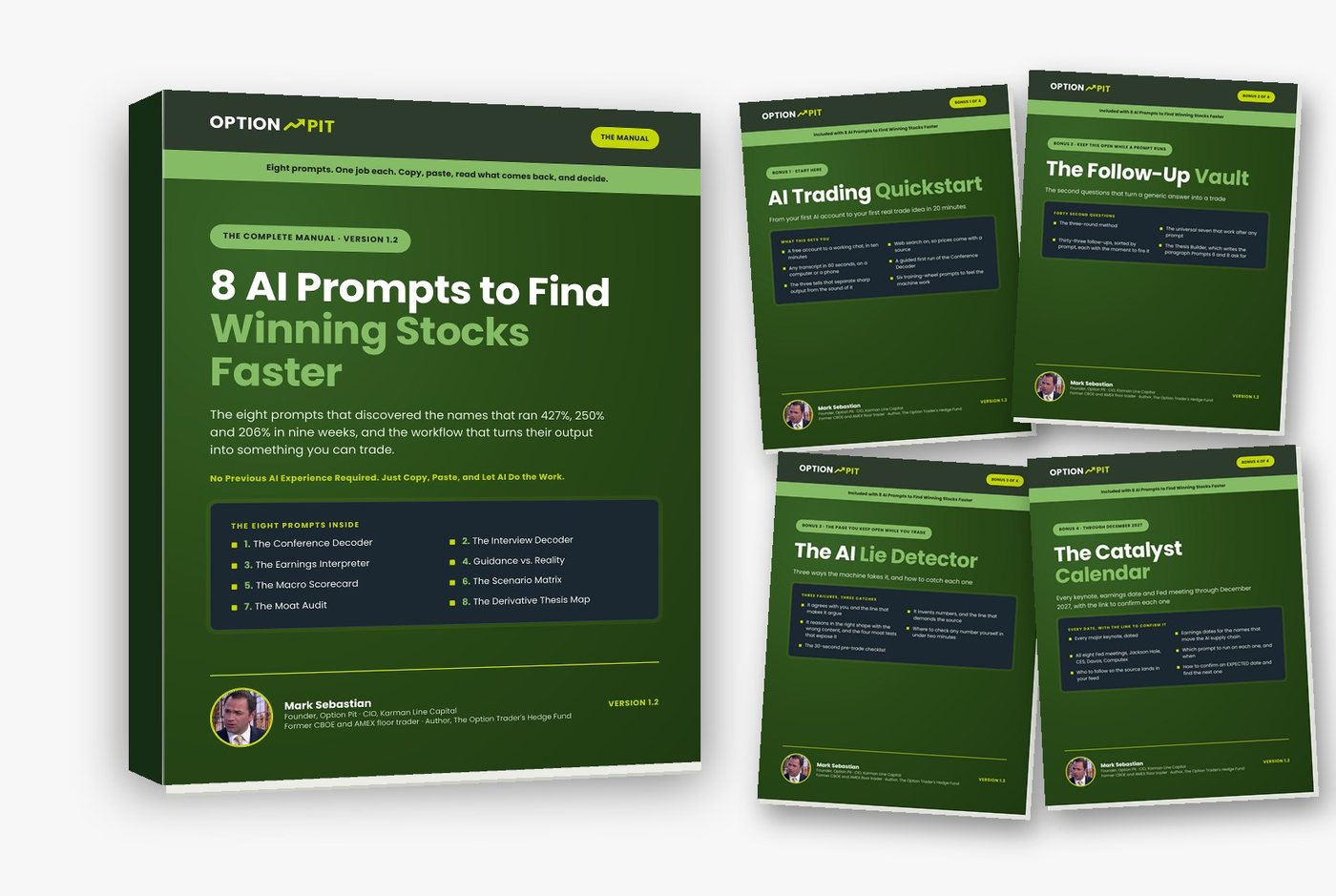
- THE CORE8 AI Prompts to Find Winning Stocks Faster
All eight prompts, copy-paste ready, each with its follow-up questions and a worked example so you see what a real output looks like. This is the system that turned a two-hour keynote into the 13-name list above.
Value$149 - BONUS 1AI Trading Quickstart
If you've never opened an AI app in your life, start on page one: setting up a free account, where to type, and your first three messages. Then paste one instruction and the AI walks you through your first Decoder run one step at a time, waiting for you to type NEXT before it moves. Plus the two refusals every trader hits in week one and the exact line to type back for each.
Value$79 - BONUS 2The Follow-Up Vault
All 40 second questions Mark fires after every prompt, organized by prompt with the moment to fire each, plus the "Thesis Builder," the interview that writes your one-paragraph thesis for you and tells you which prompt to paste it into.
Value$99 - BONUS 3The AI Lie Detector
The three ways the machine fakes it, the exact line to paste that catches each one, and the seven-question, 30-second checklist to run before you act on anything it handed you.
Value$49 - BONUS 4The Catalyst Calendar
Every keynote, earnings date and Fed meeting through December 2027, about 90 rows, each with the link to confirm it, including keynote week, November 30 to December 4, when GTC Washington and re:Invent run at the same time.
Value$99
Every download is yours to keep.
Wall Street is paying $25,000 a day to learn what these prompts do. This is twenty-seven dollars, and the next section is how to have Mark pick your inputs every week for the same money.
Every Monday, Mark Tells You What to Run
The prompts need inputs: a keynote transcript, an earnings release, a two-hour interview. The manual tells you where all of them live.
It can't tell you which three of this week's forty hours are worth your evening, and that is the part that takes the most time and the most judgment.
So I do it for you. Every Monday morning, members of the Decoder Desk get an email from me with the three things worth running through the prompts this week, ranked.
Each one comes with the link to the transcript or release, which of the 8 prompts to run on it, and a paragraph on why it matters now. Never more than five.
- The Monday Brief: three inputs, ranked, each with the link, the prompt to run and why. Every week.
- Keynote Alerts: the night of every major keynote, the transcript link and the prompt to run, so you run it before the market opens. GTC, re:Invent, WWDC, I/O, Build, Ignite, AMD, Meta, Oracle, and the hyperscaler investor days.
- Mark's Read: inside every brief, a few lines on what my own run of the week's biggest input returned, so you can check yours against mine.
- The Quarterly Toolkit Update: new and revised prompts, what changed in Claude and ChatGPT, and one new tool I'm using and how.
- The Archive: every brief and alert since launch, from day one.
It is not stock picks. The Desk hands you the input and the prompt. The list the prompt returns is yours.
The manual's directory tells you where the inputs live. The Desk tells you which three to run this week, puts them in your inbox, and tells you why.
Launch Price: A Year of the Decoder Desk for $149, Not $199
This package has never been sold before. You're reading the first page that offers it, and the first people on the Desk get it for less than everyone who comes after.
Platinum is $199 for the year: the 8 prompts, the 4 bonuses, and 52 Monday briefs from me, with the transcript and the prompt to run on it the night every big keynote drops. Through January 4, it's $149.
That's $50 off. The prompts aren't what's discounted. The year of me telling you what to run is, once, and only until the night before CES.
CES opens in Las Vegas the first week of January. Waymo opens the show Tuesday night, January 5, Lenovo takes the Sphere on Wednesday, and 4 days of keynotes follow. The launch price ends Monday, January 4, at 11:59 p.m. Eastern, so you're on the Desk before the first one.
At midnight Platinum goes to $199 and stays there. Gold is $39 a month and Silver is $27, and neither of those changes.
Choose Your Access
- PLATINUMLAUNCH PRICE$149 for the year
Launch price, $199 after January 4. The 8 prompts, all four bonuses, a full year of the Decoder Desk, the Keynote Alerts and the Quarterly Toolkit Update. That's $50 off, 25%. 365-day full refund. Your rate is locked for as long as you stay; the price goes up for new members, never for you.
- ✓8 prompts + 4 bonuses
- ✓Decoder Desk, every Monday
- ✓Keynote Alerts, night of
- ✓Quarterly Toolkit Update
- ✓365-day refund, rate locked
- GOLD$39 a month
The 8 prompts, all four bonuses, and the Decoder Desk every week, $468 over a year. Month to month, and the Quarterly Toolkit Update is Platinum only. Cancel anytime. Your first 30 days are refundable.
- ✓8 prompts + 4 bonuses
- ✓Decoder Desk, every Monday
- ✓Keynote Alerts, night of
- ✗Quarterly Toolkit Update
- ✓Cancel anytime, 30-day refund
- SILVER$27 one time
The 8 prompts and all four bonuses, yours to keep. No Decoder Desk. 365-day full refund.
- ✓8 prompts + 4 bonuses
- ✗Decoder Desk, every Monday
- ✗Keynote Alerts, night of
- ✗Quarterly Toolkit Update
- ✓365-day refund
Your Money Is Covered for a Full Year
Run the prompts for 365 days. Run keynote week with the Decoder open.
Run CES in January and GTC San Jose in March. Run every keynote and earnings date on the Catalyst Calendar for a full year.
If the prompts haven't handed you names you'd never have found on your own, email us on any of those 365 days and we'll refund every penny, the $27 or the $149, with no hoops.
Every download is yours to keep either way. Gold members can cancel any month, and the first 30 days are refundable.
Coming Up, and Almost Nobody's Watching
- San Francisco, November 17 to 20Microsoft Ignite. Satya Nadella's keynote is already on YouTube. Run it tonight.
- Reagan Building, November 30 to December 3NVIDIA GTC Washington. The roadmap talks run Tuesday afternoon, December 1. The first GTC since Jensen Huang resigned on November 12 and was reinstated on November 23.
- Las Vegas, November 30 to December 4AWS re:Invent. Matt Garman keynotes Tuesday morning, free on YouTube.
- Las Vegas, January 6 to 9CES. Waymo opens the show Tuesday night, January 5, and Lenovo keynotes at the Sphere on Wednesday.
All of them hide the next batch of names in plain sight, and the Decoder is how you read them before the crowd does.
Decoder Desk members get the transcript link the night each one posts, with the prompt to run on it.
December 1 Is Coming Either Way
There are more of these talks on the calendar than there have ever been, and Nvidia gives its next one 8 days after getting back the man who gave all the others.
All of them are free or close to it, all of them bury the next set of names in plain sight, and almost everybody watching walks away with a recap.
The last one would have pointed to 427%, 250% and 206% on the calls. The next one is December 1.
Picture the morning of Wednesday, December 2. The recaps of 4 Nvidia talks and a Garman keynote are on every site, and the obvious names have already gapped.
The version of you that bought this page has the ranked list from the night before, with the names that haven't moved yet at the top, and the version that didn't is reading the recap with everybody else.
Same week, and $27 between them.
Your Only Option,
Mark Sebastian
Option Pit
P.S. On December 1, Nvidia lays out its roadmap in Washington, 8 days after its founder walked back in the door. By that night Garman's re:Invent keynote is on YouTube, the Conference Decoder reads it in about 4 minutes, and Nvidia's 4 transcripts follow as they post. The market doesn't open until 9:30.
The last time Nvidia did this, the list it would have handed you paid 427%, 250% and 206% on the calls. So picture 9:29 on the morning of December 2.
You're looking at a ranked list with the names that haven't moved yet on top, or you're looking at the same recap as everyone else.
It's $27, delivered instantly, with a 365-day refund. And through January 4, 11:59 p.m. Eastern, the night before CES opens, a year of the Decoder Desk is $149 instead of $199.